Products


Inspiration

Energy-efficient design is much more than a box-ticking exercise for compliance. It’s about building homes that are more comfortable and cheaper to run. As building codes tighten and energy costs keep going up, knowing the fundamentals of efficiency is a must for both homeowners and builders.
When the National Construction Code (NCC) 2022 was introduced, it set a minimum requirement for new homes to be seven stars in energy efficiency. So having that firm baseline means design choices around orientation, insulation, glazing and ventilation all play a bigger role in shaping performance.

The benchmark for energy performance is the Nationwide House Energy Rating Scheme (NatHERS), which scores homes from 0 to 10 stars. The higher the thermal star rating, the less energy the home needs for heating and cooling. And while the NCC sets a minimum of seven stars, smarter design can take homes well beyond this.
Achieving higher ratings depends on the building’s thermal performance, including insulation levels measured by their R-value. A higher R-value means more resistance to heat flow, which helps keep homes warmer in winter and cooler in summer without relying on air conditioning and heating systems.
It’s also not a one-size-fits-all strategy. As Rowan Blizzard, Director at People Purpose Place, puts it: an energy-efficient home will also be reliant on how it adapts to the climate.
“In areas with a narrow temperature range like in the tropics, it’s quite easy to achieve comfort in your design,” says Blizzard, who’s also the brains behind a Barn-inspired, 8.3-star home called Innovation House.
“Meanwhile, in environments where you have big temperature ranges, like inland Australia, you have a larger envelope that you have to work within.”

A home’s orientation is the first step toward efficiency. Placing living spaces to the north and minimising east and west-facing windows, homes can capture winter sun while reducing summer heat. If you get the orientation wrong, you could be throwing away two or even three stars straight away.
This simple principle, when paired with shaded outdoor living areas, helps to reduce your home’s reliance on artificial heating and cooling – which are some of the biggest household energy costs. A good layout can also improve natural ventilation by encouraging breezes to move through the home throughout the day and evening.

Insulation is critical to thermal performance, but don’t fall into the trap of thinking it’s just about stuffing as much insulation into a wall as you can. It’s about making sure the whole system works – the cladding, the wrap, the insulation and the internal lining.
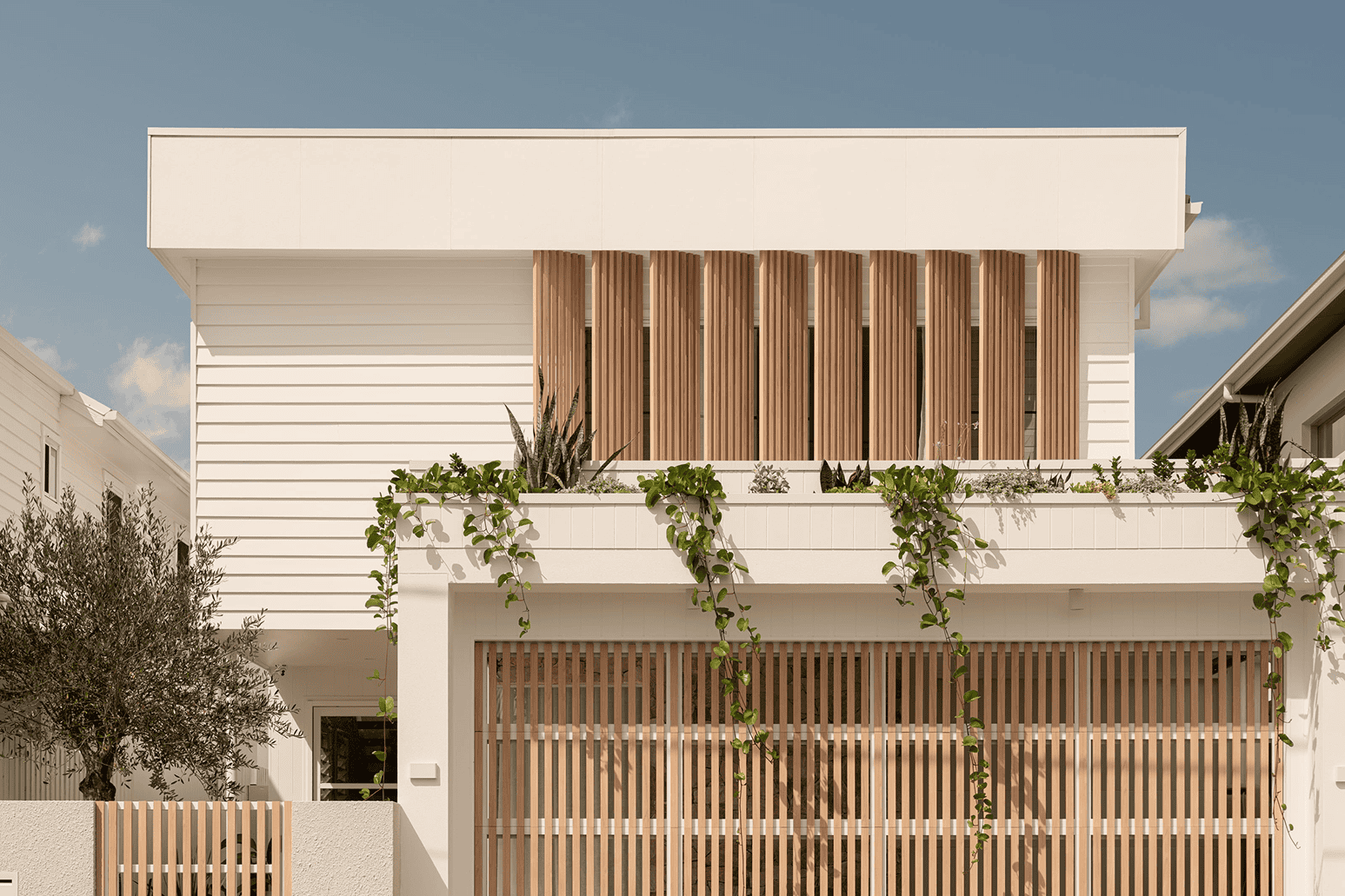
Wall wraps like Hardie™ Wrap Weather Barrier helps reduce airflow around insulation, making it work more effectively while allowing water vapour to escape. Combined with Hardie™ fibre cement cladding like Hardie™ Fine Texture Cladding and Linea™ Weatherboard, they give you a robust envelope that is engineered to stand up to harsh Australian conditions. Adding ventilation gaps behind cladding can further reduce heat transfer so that your home has a more stable temperature year-round.

Windows are often the weakest link in energy-efficient design. Double glazing, low-e coatings and smart sizing all help cut down on heat transfer. Eaves and hoods also add an extra layer of performance.
Smart shading can also help to improve comfort, making living areas more enjoyable during summer heatwaves. Bottom line? Homes designed for energy efficiency can offer greater comfort, more stable indoor temperatures, and savings on energy bills.

Designing for efficiency doesn’t always mean higher costs.
“The perception from industry and from consumers is that building for energy efficiency is complex and costs money, but that doesn't have to be the case,” Blizzard says. “Big gains are available just by orientating the home correctly to start with.”
Smart use of thermal mass can also help regulate indoor temperatures, but it works best in cooler climates with good solar opportunities. Incorporating ventilation strategies and ventilated wall cavities let heat escape and encourages natural airflow.

Even colour can make a difference; light tones on external walls reflect heat and suit warmer climates, while darker tones can help absorb warmth in cooler regions.
When it’s all put together, these cost-friendly decisions can improve your home’s performance without blowing the budget.
Download our Energy Efficiency Guide to learn more about how to design smarter, perform better and build homes for the future.