Products


Inspiration

What difference can design really make? A recent James Hardie design case study compared two homes on the same block in Melbourne. One achieved a poor star rating, while the other went above and beyond 7 stars, which is the minimum standard for new homes under the National Construction Code. The exercise illustrates how small design decisions can significantly influence performance.
“We designed these homes for Melbourne, which is in a Mild Temperate climate zone,” says Jorge Paz, Lead Technical Product Manager at James Hardie. “We had House 1, which was designed with no consideration of passive design principles and resulted in a 5.9-star rating, and House 2, which was designed with total energy-efficiency in mind and delivered a 7.5-star rating. Importantly, both houses used the same materials, so the only difference between the two is the room distribution and use of windows and shading.”
Moreover, the case study revealed there were opportunities to raise House 2’s star rating even further – to a whopping eight stars. Namely, by investing in R2.5 insulation in certain areas (i.e laundry, ground and upper-floor bathrooms) and upgrading all windows and sliding doors with double glazing plus double-low E.
House 1 showed what happens when efficiency isn’t prioritised.
“The living room and guest room on the ground floor, as well as the master suite on the upper level, were set on the south side of the house, so they weren’t getting the best exposure to natural sunlight,” Paz says. “But we flipped this on House 2, which increased passive heating in these spaces and cut down the need for additional heating.”
The result was a House 1 design that would struggle with heat gain in summer and heat loss in winter – relying heavily on expensive air conditioning and heating systems. Such inefficiencies can translate directly to higher energy bills and less comfort, particularly in Melbourne’s climate where both heating and cooling demands are high depending on the season.


By contrast, House 2 incorporated basic passive design principles.
“We oriented most of the living areas and bedrooms to the north,” Paz says. “Adding windows on the northern facade increased solar gains, and removing the shading cover over the terrace allowed for stronger solar gains and passive heating. That immediately added stars to the design.”
The uplift wasn’t just theoretical. House 2 would be more energy-efficient in Melbourne’s extremely variable climate. Families would notice the difference not only in energy bills but also in day-to-day livability.


Some homeowners assume energy efficiency requires expensive upgrades. But you don’t have to spend a fortune. Just by getting the design right at the start may help to improve the energy efficiency rating of a new home without additional cost.
Space distribution within House 2 was key – the design prioritised passive solar gains to the areas that needed it most. That’s why orientation, shading and envelope design are considered budget-friendly, high-impact strategies. Even before considering add-ons like solar panels or battery storage, getting the basics right can make a huge difference.
Rowan Blizzard from Innovation House saw similar results in his own work on his Ginn Rd - People Purpose Place project in Malanda, Queensland.
“We wanted to aim for the home to be as comfortable as possible for as long as possible without mechanical interventions,” he says. “It makes sense to make a conscious decision to have an active design where you’re responding to your environment to maintain human comfort for as long as possible.”
Blizzard’s thoughts reinforce the Melbourne case study: when efficiency is embedded in design, the benefits extend beyond compliance into everyday wellbeing. Occupants of well-designed homes often report better comfort levels, fewer drafts and less noise seeping through walls.
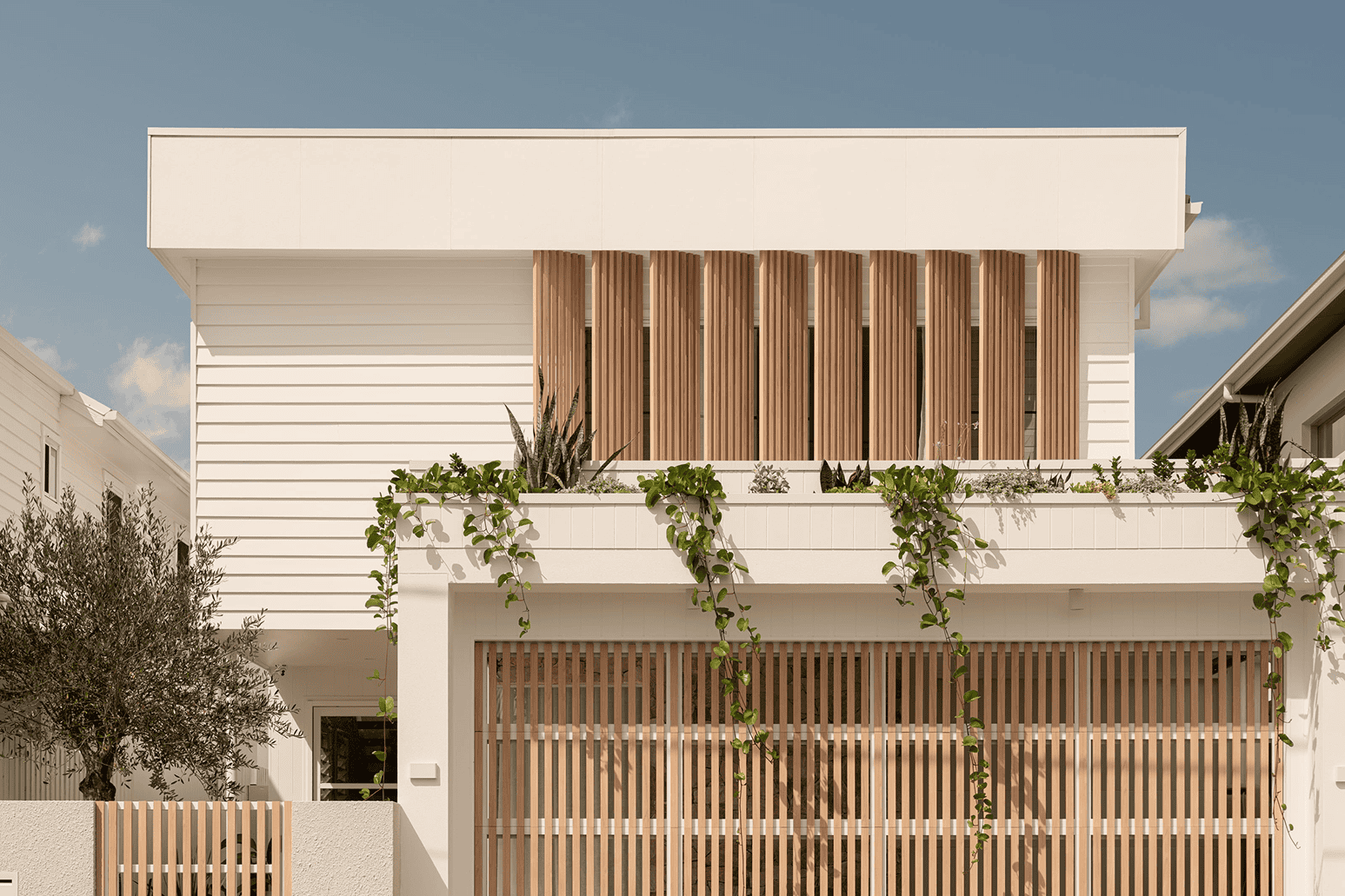
Cladding systems play a big role in building envelopes. Lightweight, ventilated facades wrapped with Hardie™ Wrap Weather Barrier and finished in Hardie™ fibre cement products will help give you durability while helping improve the home’s thermal performance.
Marrying these products with the primary design intent of the home means you can create a sleek facade with the added advantage of using Hardie™ fibre cement.
The Melbourne case study proves one clear point: efficiency starts with design. The same block, budget and builder can deliver very different outcomes depending on how early design decisions are made.
Proper design can help improve house performance. You may need to invest in higher-end materials to offset design inefficiencies.
For homeowners, the takeaway is simple: ask your designer or builder about passive design from the start. These early conversations can be the difference between a home that barely complies with energy efficiency requirements and one that achieves high energy efficiency levels.
Want to see the full comparison and learn the design moves that matter most? Download our Energy Efficiency Guide.